Information For Young People

We’ll work with you, your family and your school to make sure you can succeed - at home, in school or somewhere else that suits you
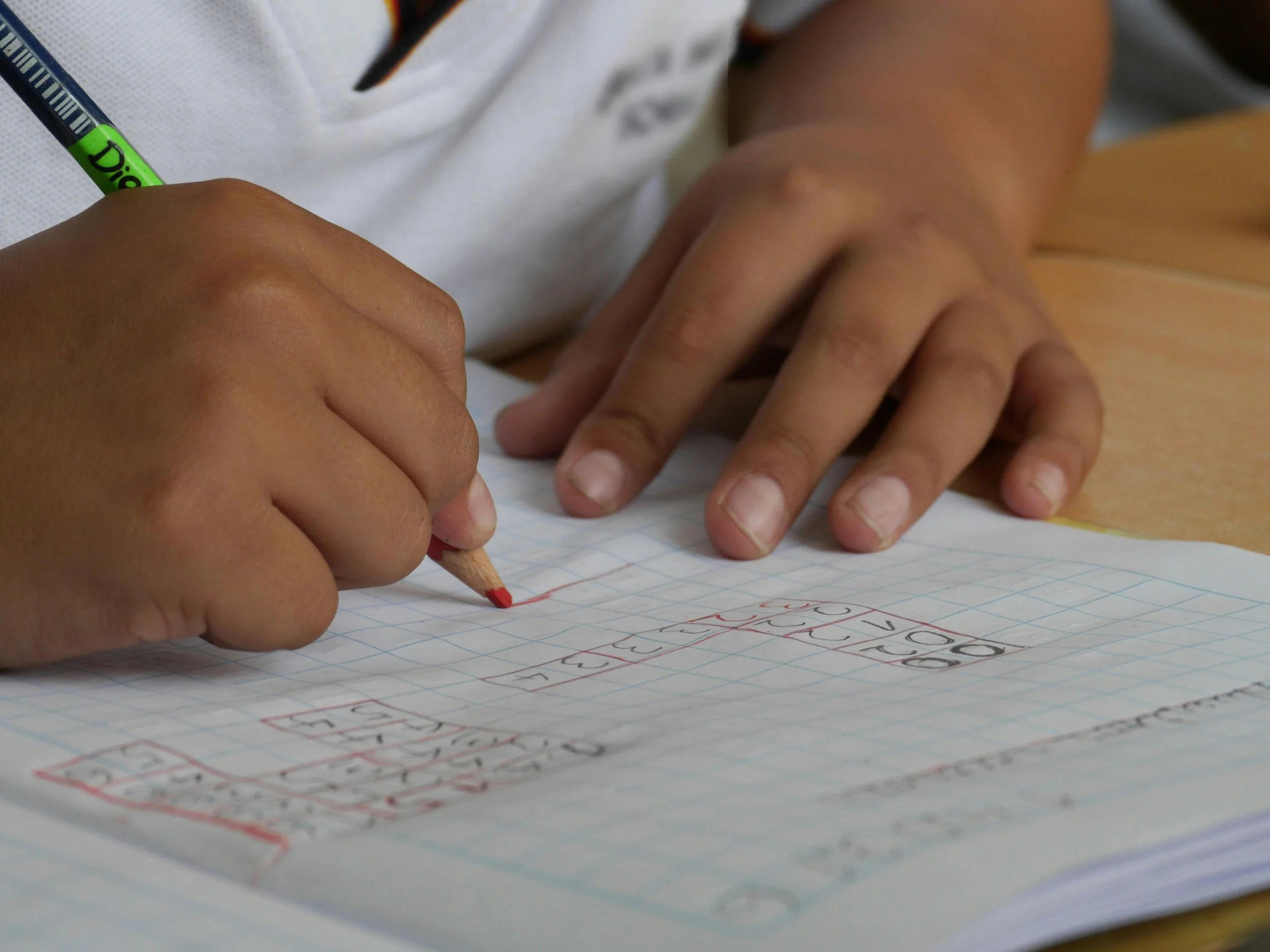
A child's hand is holding a red colored pencil and writing on a piece of graph paper, while the other hand rests on the paper. The child is wearing a white shirt.

What do we do?

  • Listen to you and work out ways to help you succeed

  • Help you build confidence and manage your behaviour

  • Find gaps in core subjects and work with you on them

  • Improve reading and number skills; prepare for GCSEs/other exams

  • Support you to go to school, college or university

We want to understand what’s going on for you and give you the tools, encouragement and guidance to move forward with confidence. Our support is designed to make learning feel achievable, helping you settle, focus and feel proud of your progress. As you grow in your skills and independence, we’ll be here to guide your next steps and open up new opportunities in education and beyond.

Inspiration & Resources

🎧

Nelson Taylor Podcast

Hear how Nelson uses his autism as a strength in the world of racing.

🎤

Chloe's Story

A real young person’s story about struggle, courage and positive change.

🎥

Chris Packham Film

Chris Packham challenges perceptions of disability and difference.

📖

Neurodivergent Support Pack

Youth-created guide explaining neurodivergence with practical tips, myths-busting, and lived experiences.

🏳️‍🌈

The Proud Trust

Support, information, and community for LGBTQ+ young people across the UK.

⚧

Mermaids UK

Specialist support for transgender and gender-diverse young people and their families.

💬

Talk to Frank

Honest, confidential advice about drugs and alcohol, without judgment.

🖥️

Kooth

Free online mental-health service offering chat, tools, and safe support for young people.

📞

Childline

A safe, confidential space where you can talk to someone about anything that’s worrying you.

❤️

PAPYRUS Hopeline247

A 24/7 helpline offering support to young people experiencing suicidal thoughts or crisis.
Young Voices

Maintaining Motivation and Balance in Education

Mia shares practical advice for staying organised, maintaining motivation and looking after your wellbeing throughout the academic year.

Read Mia’s article

As a young person in education myself, I understand the struggle of balancing education with our personal lives. Sometimes, it is easy to lose focus in lessons or lose the motivation to study. This article covers ways in which you can maintain consistent effort and a manageable routine throughout your academic year, even when it feels increasingly difficult to do so.

Start with your mindset

Firstly, our mindset is the single most important piece of the puzzle when it comes to success in education. Regardless of intelligence or skill level, we all need solid mental wellbeing to be successful.

Especially during exam season, I often feel as though there simply isn’t enough time in the day. By creating a revision timetable that also leaves room for my hobbies, I begin to manage my workload and relieve some of the pressure caused by exams.

When doing this, it is essential to dedicate a reasonable amount of time to all your subjects, even the ones you dislike. Gaining confidence in your knowledge across all your classes helps stop difficult topics from being the reason you drop marks in an exam or feel lost in a lesson.

Organise your notes

Another way to ease your mind as a student is to organise your revision and notes into different subjects or topics. There is truly nothing worse than motivating yourself to revise or do your homework, only to lose your notes in a mountain of loose sheets.

When I started my first year of sixth form, where there was much more content to cover than at GCSE, I quickly realised that the most successful students were often the ones who knew exactly where their notes were and could easily retrieve them for an upcoming topic test.

Being organised saves time and reduces the stress of trying to sort everything out when you should be studying.

Find the revision method that works for you

When creating revision materials, don’t be afraid to use trial and error. We all learn differently, and that is completely okay.

During secondary school, I found that although flashcards were my favourite revision method for science, they definitely did not help me as much in Maths. By reaching out to a friend whose strongest subject was Maths, I discovered that past papers were surprisingly effective.

Instead of comparing my weaknesses with my friend’s strengths, I used my support system and found a helpful solution.

I cannot stress enough how counterproductive it is to use our peers as an indicator of our self-worth.

Education does not solely teach us academic knowledge; it also prepares us for life, which is full of tests and problems to solve. By taking lots of small steps to use our time efficiently, we can approach education with a clearer focus.

Set goals that are meaningful to you

This leads me to setting goals. Whether they are big or small, long-term or short-term, having a plan helps us recognise milestones and see our progress.

Your aspirations should be unique to what you desire and should not simply reflect somebody else’s goals. When we experience setbacks, we need to keep pushing, because dwelling on them will not move us closer to where we want to be.

With a finish line in mind, visualisation can logically remind us why we are doing this in the first place.

For some people, a useful goal may be as simple as arriving at lessons on time. The first five minutes may not seem like a huge deal, but missing them every day in just one lesson can mean missing 35 minutes of crucial teaching time each week.

Protect your physical and mental wellbeing

None of this matters if you do not prioritise your physical and mental wellbeing above all else. Make time to do what you are passionate about, and make time to see your loved ones.

It can help to reflect honestly on the unhealthy habits many students develop, including habits that I am still sometimes guilty of, and consider what changes could improve our health.

Ask yourself:
  • Do I scroll on TikTok before bed and completely lose track of time?
  • Do I maintain healthy eating and drinking habits?
  • Do I have healthy ways of regulating my emotions?
  • Do I leave studying until the last minute and end up cramming?

These are all things we can be guilty of doing. What matters is that they do not become stubborn habits.

You’re human, not a machine.

“We are all imperfect and must make mistakes in order to grow.”

— Mia, 17

Frequently Asked Questions

1. What is NT&AS and how can you help me?

NT&AS works nationally with young people who are having difficulty accessing education, or who need additional specialist support.

We offer bespoke programmes of teaching and learning, tailored to your needs.

We also support young people with mental health and well-being, children in care, those with SEND (special educational needs and disabilities), and those who may be permanently excluded from school or finding mainstream school difficult.

2. What will working with NT&AS look like for me?
  • You’ll get a personalised plan based on your needs.
  • Support might be face-to-face in your home, school or community venue, or online.
  • You’ll work with skilled and experienced teachers/advisors who listen to you and your family.
  • You’ll be part of a “Team Around the Child” approach, meaning several people (education, health, social care) might work together to support you.
3. Will I still have to work towards exams or qualifications?

Yes — depending on your age and what you’re aiming for, we’ll look at what’s right for you (for example GCSEs, A-Levels, other qualifications). We also provide “examination access and inclusion” support.

This means you won’t miss out simply because standard education hasn’t worked out yet.

4. How will you support my mental health, SEND or other complex needs?

We are experienced in working with young people who have SEND, autism, trauma, social, emotional and mental health needs (SEMH).

Support includes specialist provision, developing social skills, a trauma-informed approach, and considering your mental health and wellbeing alongside your education.

5. Will I have a say in what happens?

Yes — a big part of NT&AS’s approach is about listening to you and your family.

You should feel involved in setting the goals, choosing the way you learn, and deciding what success looks like for you (not just what someone else thinks is success).

6. What if I’m worried about safeguarding or safety while working with NT&AS?

Safeguarding, health & safety, equality & diversity are all built into the way we work.

If you ever feel unsafe, unsure, or uncomfortable, you should speak up — to your teacher/advisor, or directly contact the designated safeguarding lead in NT&AS (you can ask for their name/contact).

Your voice matters.